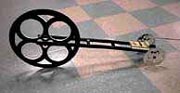
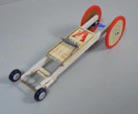
 MOUSE TRAP CAR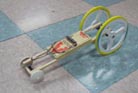
I. CONTEST PURPOSE
To provide an opportunity to use critical thinking skills in developing a solution to a problem in technology.
II. ELIGIBILITY OR ENTRY
A. Entries are limited to five (5) individual entries per chapter.
B. See "General Rules" For additional information
III. LIMITATIONS
This problem focuses on the design and construction of an experimental self-propelled vehicle by a VICTOR mousetrap. The mousetrap must remain as purchased. This means that the trap base and spring cannot be altered in any way. The only acceptable alteration to the trap itself will be an extension of the trap bar.
1. The spring must remain on the trap.
2. The spring cannot be wound tighter.
3. The use of rubber bands, elastic cords, or other springs that are directly related to the movement of the trap bar will not be allowed.
4. The original trap bar will be the only power mechanism for the vehicle. It is permissible to use glue or mechanical fasteners to adhere the base of the vehicle.
5. The use of gear assemblies in the drive train to provide additional mechanical advantage will be allowed.
IV. SPECIFIC REGULATIONS
A. The frame and wheel must be made from materials the contestant has designed and assembled. Commercially made material will not be accepted. However, the students may engineer the frame and wheels from a variety materials or everyday products. Materials would be such that they will be shaped, formed or molded into parts that can be used as wheels.
EXAMPLES WOULD BE:
1. Acceptable materials:
a. Paper, Wood, or cardboard.
b. Small cans
c. Stereo records, CD's
d. Rubber balls.
2. None - acceptable materials:
a. Plastic model kit frames.
b. Metric 500 or model kit wheels (commercially made wheels).
B. The vehicle should be designed to run on a wood, tile, or concrete floor. The type of floor used during the competition will be announced at the contest. Therefore, all vehicles need to be ready to compete on any of these surfaces.
C. Overall dimensions of the vehicle shall not exceed:
LENGTH ---- 24 inches (with the trap bar extended in the loaded or unloaded condition).
WIDTH ------ 12 Inches
HEIGHT ----- 18 Inches. The height will be measured from the floor to the highest Arc of the trap bar or any other portion of the vehicle.
D. The track will be eight (8) feet wide. If the vehicle leaves the confines of the track, the distance will be marked where any part of the vehicle leaves the track boundary. The vehicle should be designed to stay within the eight (8) feet track lane. The distance the vehicle travels will be measured from the starting line to the front of the vehicle.
E. The student will not be allowed to remove, alter, or modify their vehicle in any way after the vehicle has been registered. Any vehicles damaged during the race will be judged by the contest coordinator to determine if the vehicle was damaged by conference personnel or by design fault. A ruling as to whether or not the vehicle will be held from further competition or repaired by the student will be made at this time.
G. The student will be allowed to handle their vehicle at the beginning of the race. They will be allowed to set the trap and place the vehicle down behind the starting line. A designated judge for the contest will release the vehicle at the designated time. The distance traveled will be measured and the vehicle removed from the track by conference personnel.
F. Once the vehicle is set in motion, it cannot be remotely controlled or touched until it has come to rest for at least five (5) seconds when the run will be determined to be concluded.
G. The vehicle will run two races with the longest distance of either race being the distance recorded for competition. The vehicle which has traveled further than any other vehicle is the winner. Additional finalists are recognized accordingly.
V. PROCEDURE
A. Registration --- Contest participant must register for the event in accordance with procedures established for the conference.
B. Contestants must have their mousetrap vehicle checked into the judging room as specified in the conference program before the published deadline.
C. Contest participants must assemble in the general area of the contest prior to the time designated for the contest.
D. Races take place on-site, vehicle construction does not.